
Discussion Widget
The Discussion Widget lets you create structured, interactive discussion spaces anywhere across your site, funnels, and Circles. It’s designed for ongoing conversations, support threads, topic-based discussions, and real-time engagement—similar to tools like Slack or forums, but fully integrated and on-brand inside Recrevio.
Unlike simple comments, Discussions support multiple threads (channels), nested replies, polls, and rich interaction, making them ideal for communities, programs, and memberships.
With the Discussion Widget, members can:
- Start and participate in topic-based discussions
- Reply in threaded conversations
- Mention other members using @mentions
- Vote in interactive polls
- Engage across pages, funnels, and Circles using the same discussion threads
💡 Tip
Discussions are reusable. The same discussion thread can appear in multiple places while keeping all messages, replies, and polls in sync.
Where You Can Use the Discussion Widget
The Discussion Widget can be added anywhere widgets are supported, including:
- Pages
- Blog posts
- Funnel steps
- Popups
- Inside Circles
This makes it easy to place conversations exactly where context matters, such as below lessons, inside onboarding flows, or in dedicated community areas.
How to Add a Discussion Widget
To add a Discussion Widget:
- Open the page, funnel step, popup, or Circle page you want to edit
- Click the ➕ (plus) button to open the widget panel
-
Locate the Discussion Widget
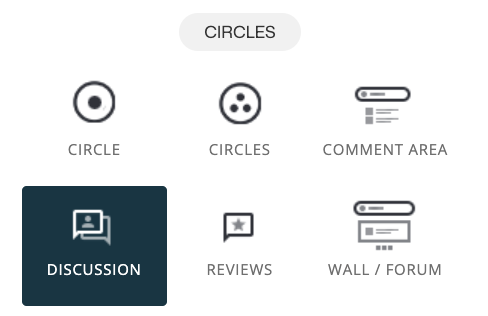
- Drag it onto the canvas
Once added, you can configure how the discussion board should behave and appear.
Choosing the Discussion Structure
When setting up the Discussion Widget, the first and most important decision is how many channels (threads) you want to use — and how they should be displayed.
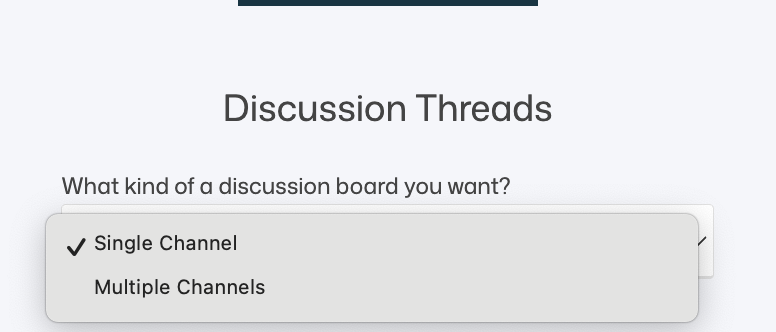
There are two main structures:
- Single Channel
- Multiple Channels (with different view styles)
Each option serves a different purpose and offers different configuration possibilities.
1. Single Channel Discussion
A Single Channel discussion is best when you want one focused conversation tied to a specific piece of content
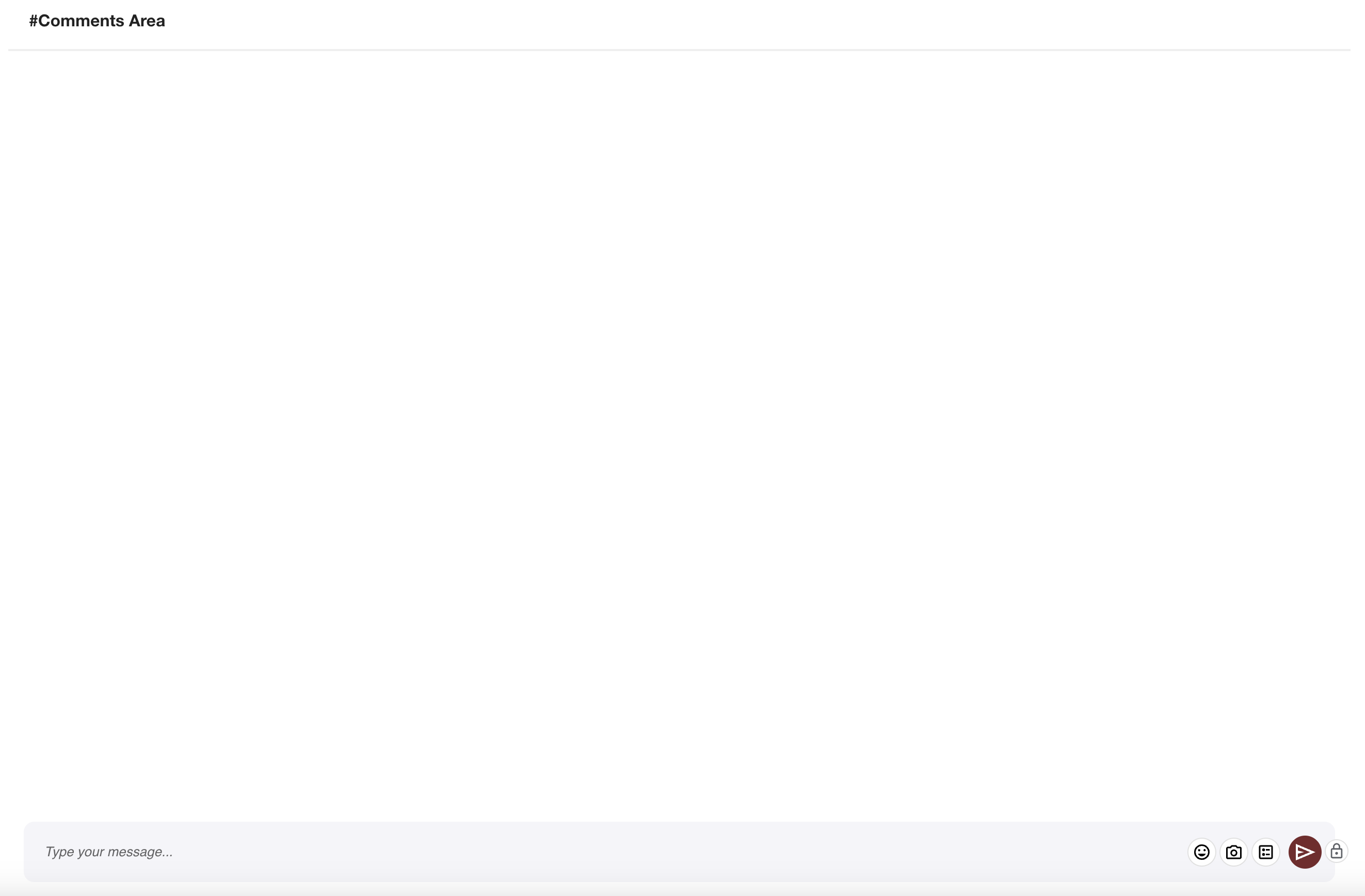
When to Use Single Channel
Use a single channel when you want:
- One central conversation
- Q&A under a page, lesson, or resource
- A simple discussion without topic separation
Typical use cases:
- Discussion under a lesson or video
- Feedback under a page
- One-topic conversations
Single Channel Settings
When Single Channel is selected, the following settings are available
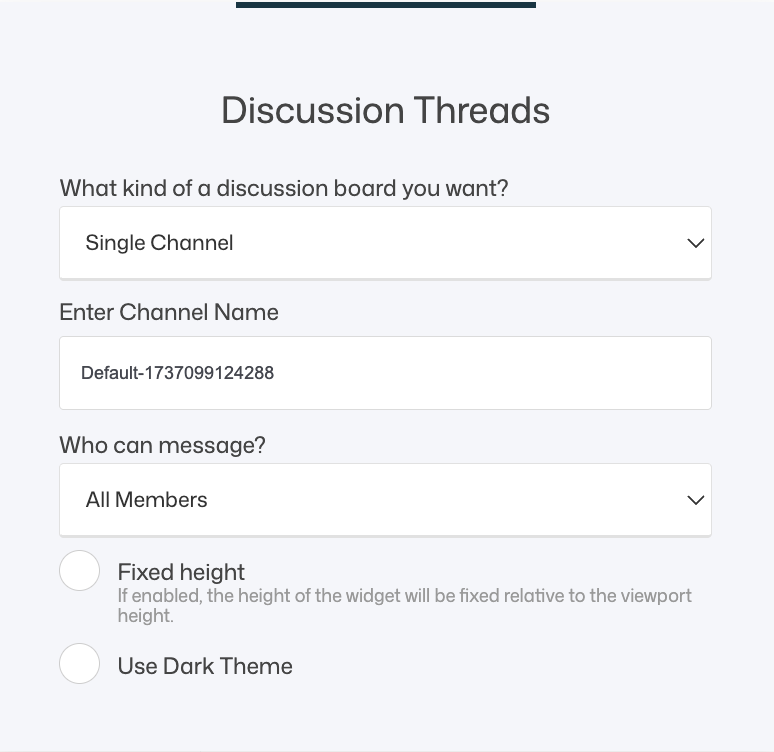
Channel settings
- Channel name (thread name)
- Who can message:
- All Members
- Admins only
- Admins and Moderators
Widget settings
- Fixed height (optional)
- Use dark theme (optional)
💡 Important
The channel name is reusable. The same discussion thread can be embedded in multiple pages, funnels, or Circles, and all messages remain connected wherever the thread is shown.
2. Multiple Channels Discussion
Multiple Channels allow you to run several parallel discussion threads, each with its own topic.
This setup is ideal for:
- Support vs general discussion
- Different modules or topics
- Larger communities
- Structured conversation spaces
When using Multiple Channels, you:
- Define multiple channels (threads)
- Can add, rename, delete, and reorder channels
- Choose how the channels are displayed using a View Style
There are three available view styles.
💡 Important
The channel name is reusable. The same discussion thread can be embedded in multiple pages, funnels, or Circles, and all messages remain connected wherever the thread is shown.
2A. Multiple Channels – Row View
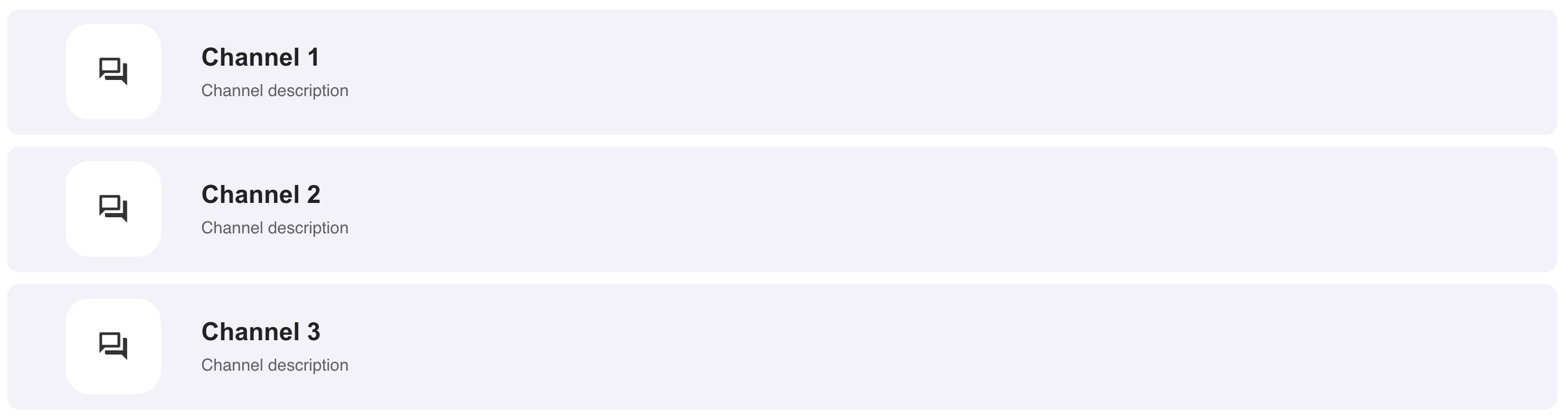
Row View displays discussion channels in a vertical, stacked layout.
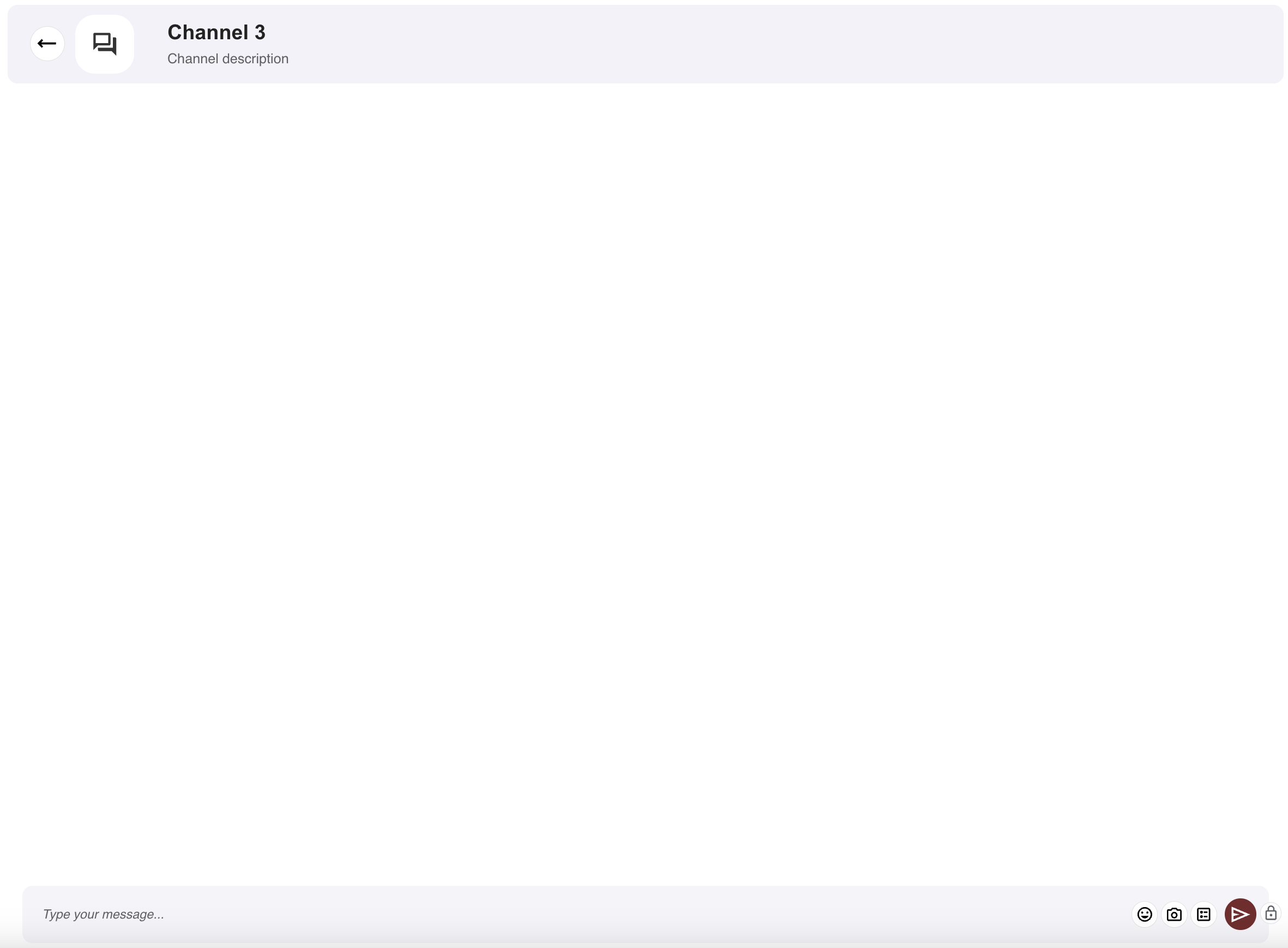
Opening a channel by clicking on it:
When to Use Row View
Row View is ideal for:
- Structured discussions
- Linear topic browsing
- Educational or documentation-style layouts
Row View Characteristics
- Channels are stacked one below the other
- Clean, linear layout
- Easy to scan and follow
- No grid or sidebar separation
Row View Settings
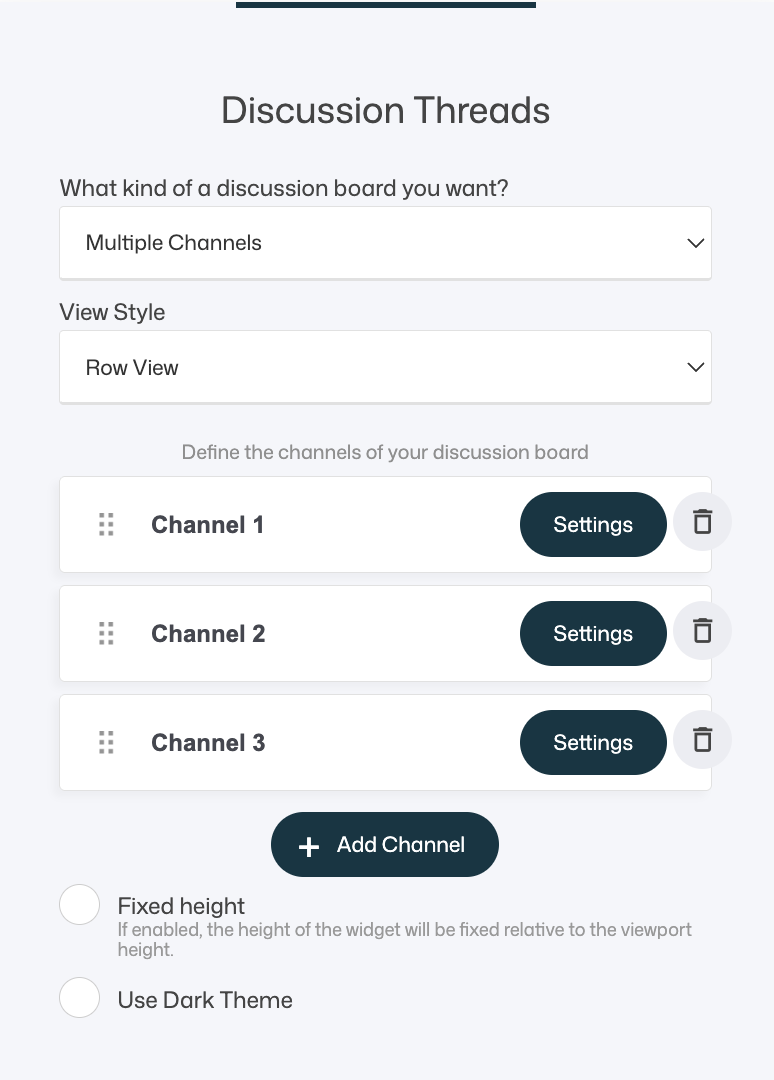
Widget-level settings:
- Fixed height (optional)
- Use dark theme (optional)
Channel-level styling settings (available ✅):
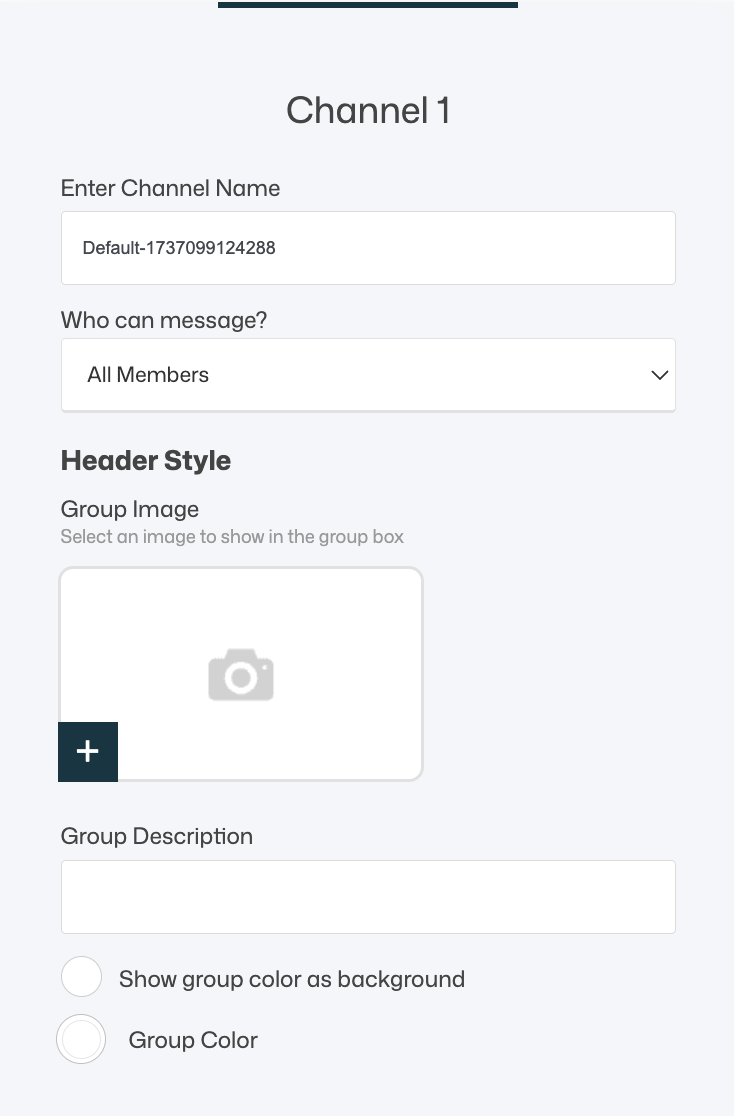
- Channel name
- Header image or logo
- Group description
- Group background color
💡 Note
Each channel can be visually customized to:
- Clarify its purpose
- Match your branding
- Improve scannability
2B. Multiple Channels – Column View
Column View displays channels as cards in a grid layout.

Opening a channel by clicking on it:
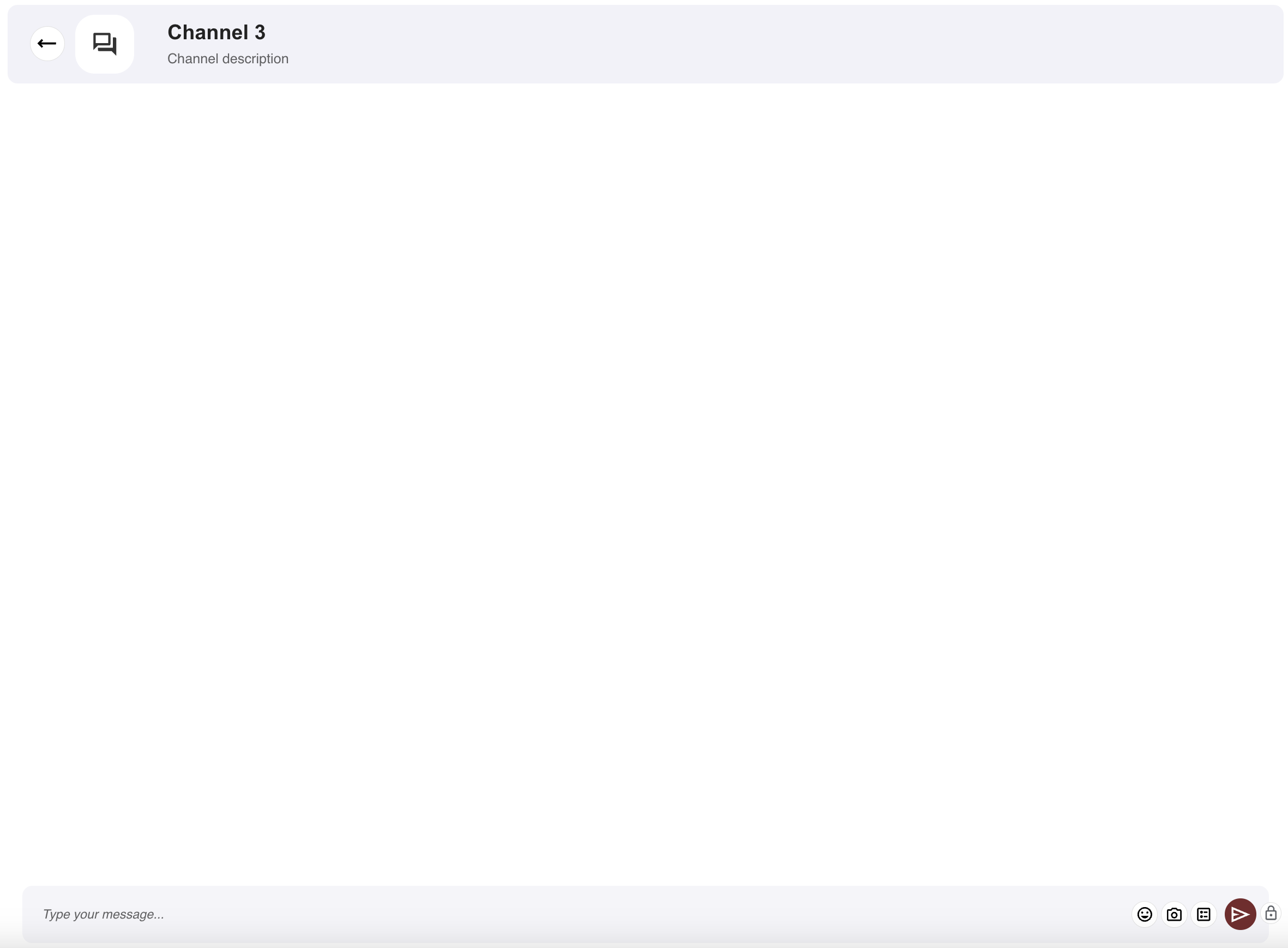
When to Use Column View
Column View works best for:
- Overview pages
- Community hubs
- Program or topic libraries
Column View Characteristics
- Channels are displayed in columns
- You can choose 2–5 channels per row
- More visual and card-based than Row View
Column View Settings
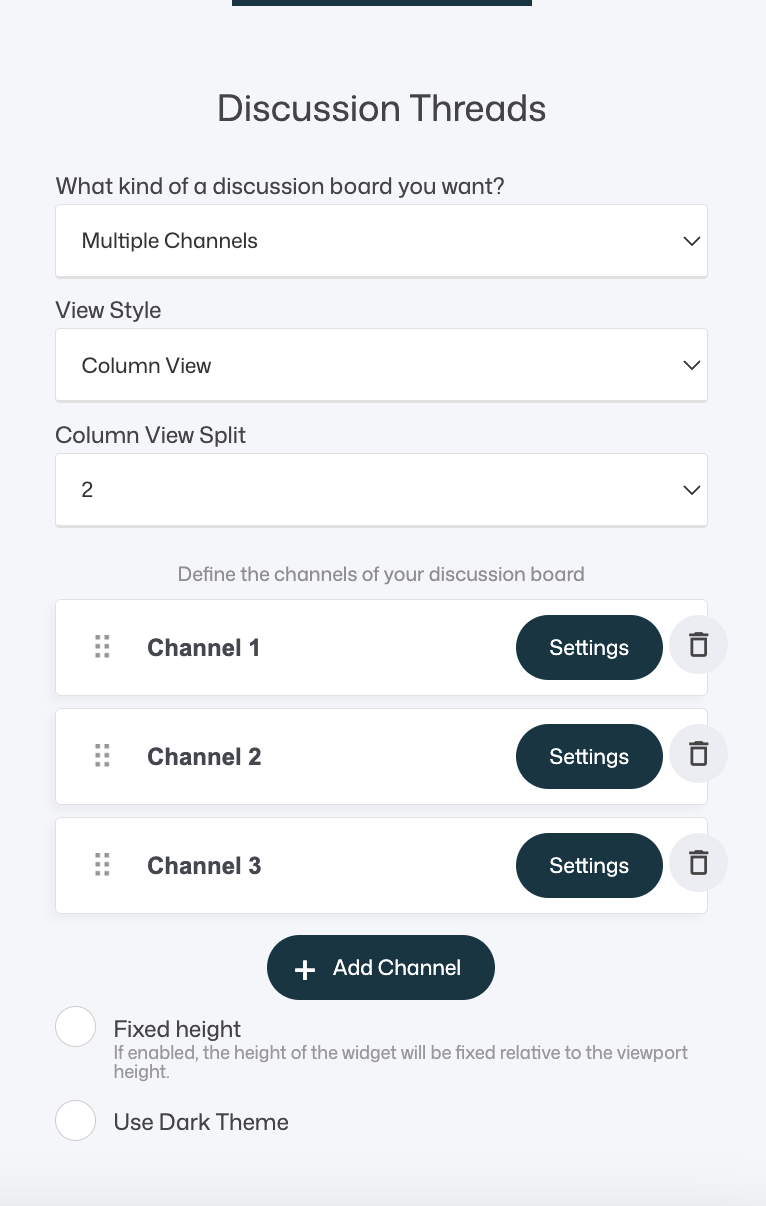
View-specific settings:
- Column split (2–5 columns per row)
Widget-level settings:
- Fixed height (optional)
- Use dark theme (optional)
Channel-level styling settings (available ✅):
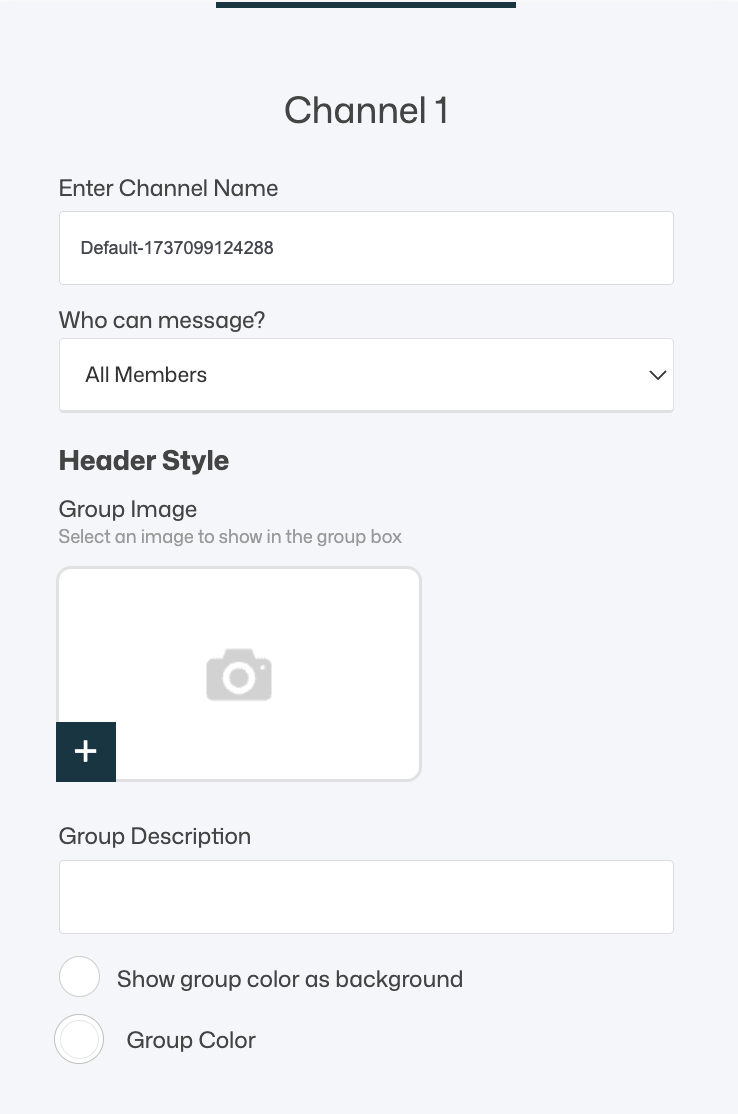
- Channel name
- Header image or logo
- Group description
- Group background color
Column View is ideal when you want:
- Visual differentiation between channels
- A more branded, library-style layout
💡 Note
Each channel can be visually customized to:
- Clarify its purpose
- Match your branding
- Improve scannability
2C. Multiple Channels – Sidebar View
Sidebar View presents channels in a chat-style interface.
When to Use Sidebar View
Sidebar View is ideal for:
- Communities
- Support environments
- Real-time or ongoing conversations
Sidebar View Characteristics
- Channel list displayed on the left
- Active discussion shown in the main area
- Chat-like, highly interactive experience
Sidebar View Settings & Limitations
Available settings:
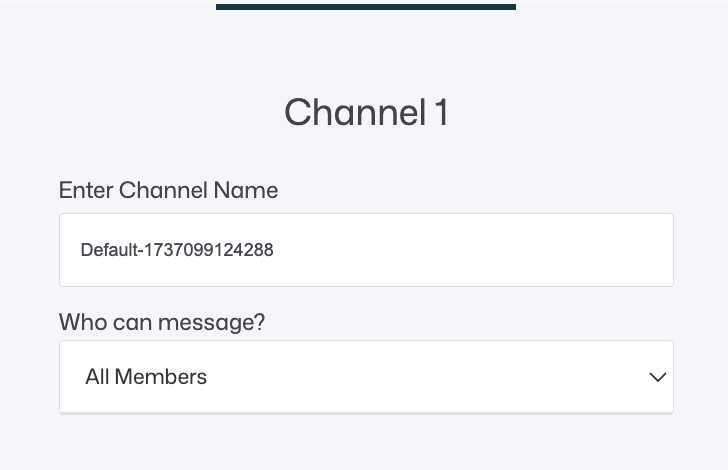
- Channel name
- Who can message
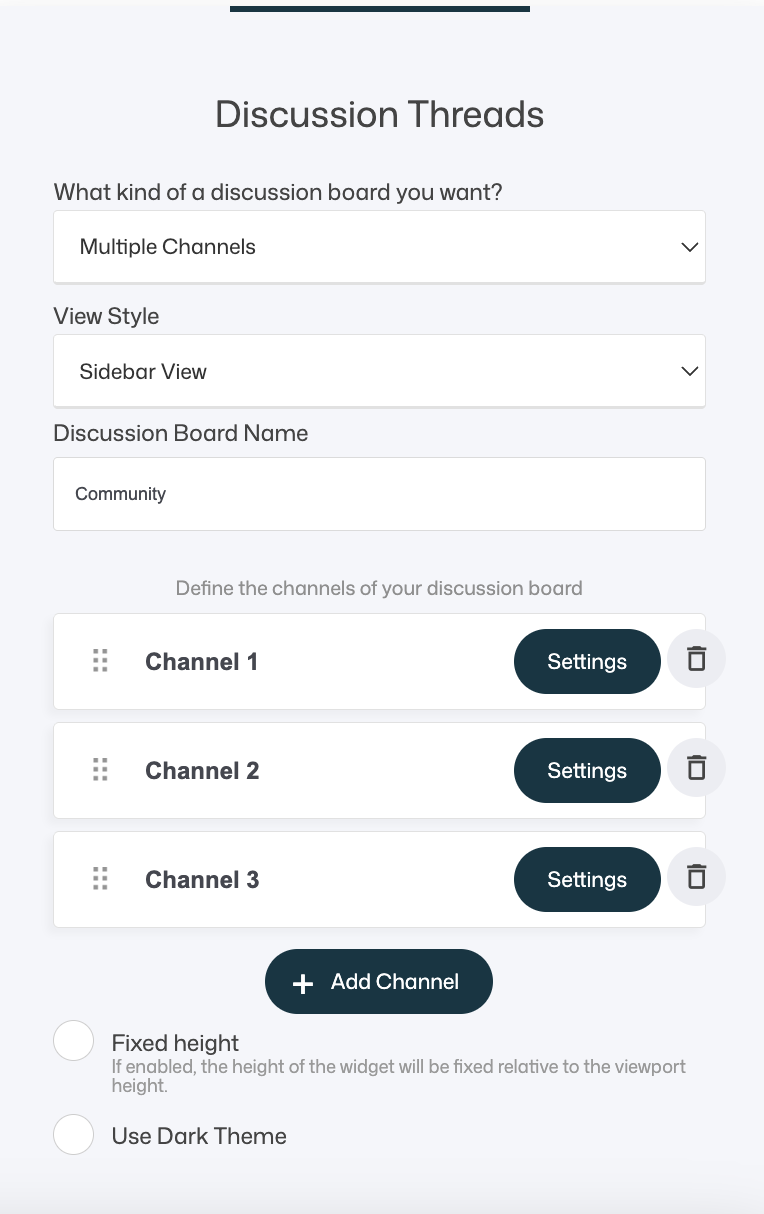
- Discussion board name (displayed in sidebar header)
- Fixed height (highly recommended)
- Use dark theme (optional)
Channel-level styling settings (NOT available ❌):
- No header images
- No group descriptions
- No background colors
💡 Important
Sidebar View prioritizes speed, readability, and conversation flow over visual branding.
Choose Sidebar View when usability and interaction matter more than visual customization.
Channel Settings (Applies to All Views)
Each channel (thread) has its own core settings:
- Channel name
- Who can message:
- All Members
- Admins only
- Admins & Moderators
Thread behavior:
- Replies are nested under the original message
- Replies are expandable via the Replies button and open in a panel to the right
- Conversations stay structured and easy to follow
💡 Important note – Member Registration Required for Social Interaction
To comment, react, or participate in any social features inside Recrevio, users must be registered and logged in as members.
This applies to all social and community-based widgets and areas, including:
- Comments
- Discussions
- Walls /Forums
- Reviews
Only logged-in members can:
- Write comments or replies
- React to content (likes, emojis, etc.)
- Mention other members
- Participate in discussions or threads
Visitors who are not logged in can view content (if access levels allow it), but they cannot interact until they have created a member account and logged in.
💡 Why this matters
Requiring member registration ensures:
- Clear identity and accountability in discussions
- Better moderation and role-based permissions
- Accurate engagement tracking and notifications
- A safer, more structured community experience
If interaction is an important part of your experience (comments, discussions, community), make sure:
- Member registration is enabled
- Access levels allow logged-in members to view the content
This creates a smooth and secure foundation for meaningful engagement inside your Circles and social areas.
Managing Channels (Multiple Channels Only)
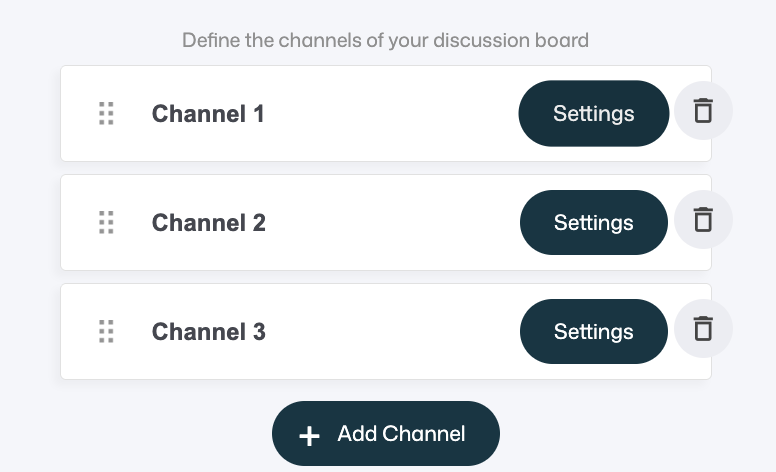
When using Multiple Channels, you can:
- Add new channels
- Rename existing channels
- Delete channels
- Drag & reorder channels freely
This allows you to:
- Highlight important discussions
- Keep active channels visible
- Adapt the structure as your community grows
Polls Inside Discussions (applies to all views)
Discussions support interactive polls, making them a powerful tool for turning conversations into actionable insights.
Polls allow you to ask questions directly inside a discussion thread, enabling members to engage, vote, and share input in a structured way—without breaking the conversation flow.
With polls, you can:
-
Ask questions inside a thread
Start a poll as part of an ongoing discussion to collect opinions in context.
-
Let members vote and participate
Members can select one or more answers and engage in follow-up discussion.
-
Trigger automations based on results
Poll outcomes can be connected to automations, helping you act on feedback automatically.
This makes polls ideal for decision-making, feedback collection, prioritization, and community involvement.
Why Use Polls in Discussions
Interactive polls help you:
-
Gauge deeper opinions
Collect structured feedback to better understand member preferences and needs.
-
Increase participation
Voting is fast and accessible, encouraging more members to engage—even those who might not normally comment.
-
Create dynamic discussions
Polls invite follow-up comments, explanations, and debate, keeping conversations active.
-
Turn feedback into action
By connecting polls to automations, insights can immediately lead to next steps.
Creating a Poll Inside a Thread
Polls are created directly within a discussion thread, making them part of the natural conversation flow.
Once added, the poll appears as a poll thread comment, where members can:
- Vote
- See results (depending on setup)
- Comment and discuss the poll topic
Poll Settings
When creating a poll, you have full control over how members interact with it. All settings are configurable and can be updated later.
Commenting on Polls
You can decide who is allowed to comment on the poll discussion:
- All Members
- Admins only
- Admins and Moderators
This allows you to keep polls open and conversational—or more controlled and focused.
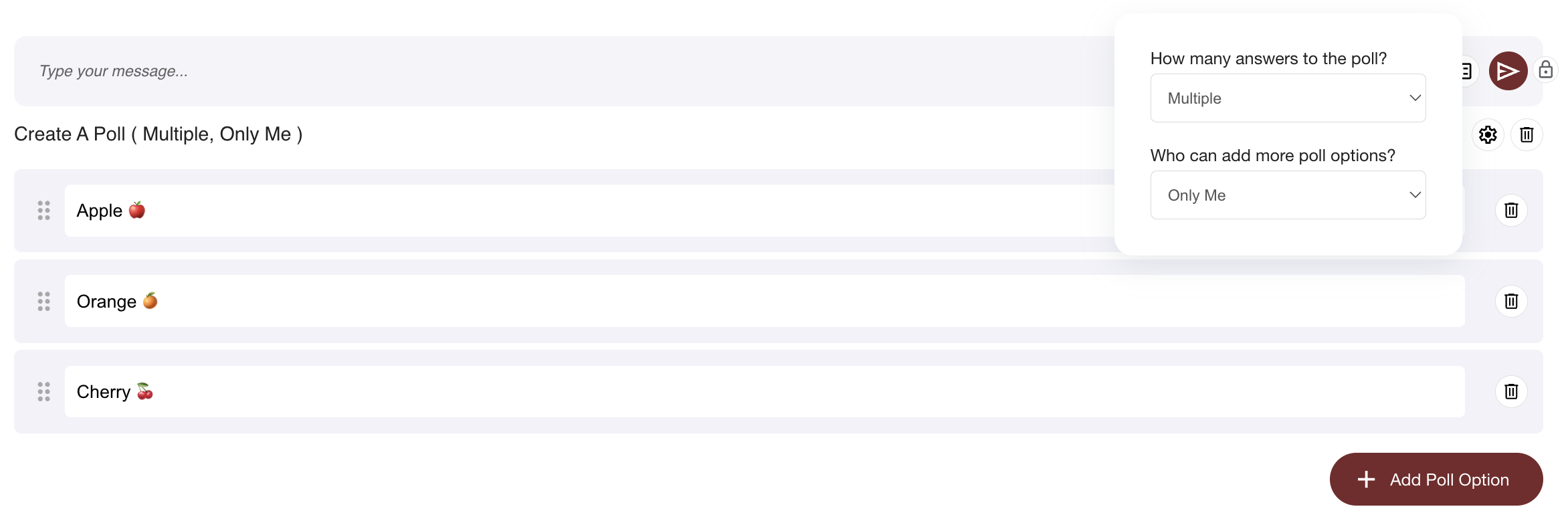
Number of Answers per Member
You can choose how members are allowed to vote:
- Single answer – Members can select only one option
- Multiple answers – Members can select more than one option
This is useful for:
- Prioritization (single choice)
- Preference mapping (multiple choices)
Who Can Add New Poll Options
You control whether members can add their own answer options to the poll:
- Only me – Only the poll creator can add options
- Moderators only – Moderators can add additional options
- Everyone – All members can freely add their own options
Allowing option additions can:
- Surface ideas you hadn’t considered
- Increase ownership and participation
- Create more collaborative discussions
💡 Note
You can return to any discussion thread at any time and modify poll settings, including:
- Comment permissions
- Number of selectable answers
- Who can add options
This flexibility allows you to adapt polls as discussions evolve.
When Polls Are Especially Useful
Polls work particularly well for:
- Community feedback and surveys
- Feature prioritization
- Group decision-making
- Event planning
- Program or content direction
- Support and triage questions
By combining polls, discussions, and automations, you turn conversations into insights—and insights into action.
Summary
The Discussion Widget allows you to:
- Create single or multi-channel discussions
- Reuse the same threads across pages, funnels, and Circles
- Enable replies, mentions, reactions, and polls
- Control permissions and moderation
- Choose between structured, visual, or chat-style layouts
Key Takeaway
- Single Channel → focused, simple discussions
- Multiple Channels
- Row View → structured, stylable
- Column View → visual, stylable
- Sidebar View → chat-like, no styling
By choosing the right structure and view style, you can build clear, scalable, and engaging discussion spaces exactly where your members need them.