
How to Create and Manage Physical Products
Physical Products are used for tangible items that require shipping, inventory tracking, and (optionally) variations such as size or color.
This article walks through every section of the Physical Product editor, from top to bottom, explaining each setting and offering best-practice recommendations.
Creating a Physical Product
To create a Physical Product:
- Go to Products → All Products
- Click Add Product
- Select Physical Product as the product type
This opens the product editor, which is divided into three main areas:
- Main product details (left column)
- Product settings & media (right column)
- Advanced product options (sections below)
1. Main Product Area (Top Left)
This is where you define the core information about your product.
Product Title
Enter the name of your product as it will appear:
- In your store
- On checkout pages
- In order confirmations
- In emails and receipts
💡 Tip:
Use clear, descriptive names. If you sell variations, keep the title generic and handle specifics with variations (e.g. “T-Shirt” instead of “Black T-Shirt – Size M”).
Description
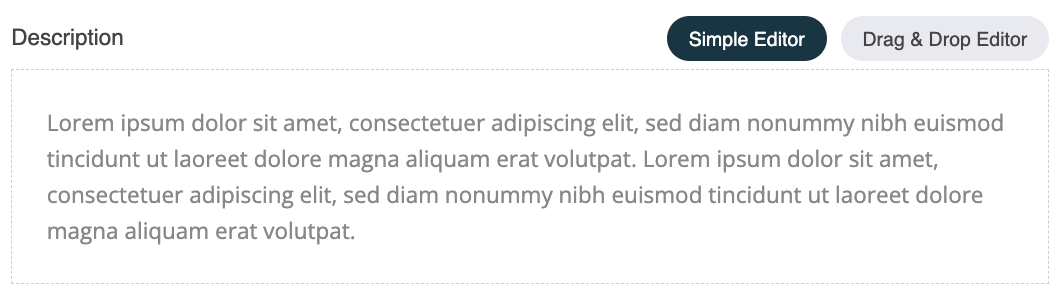
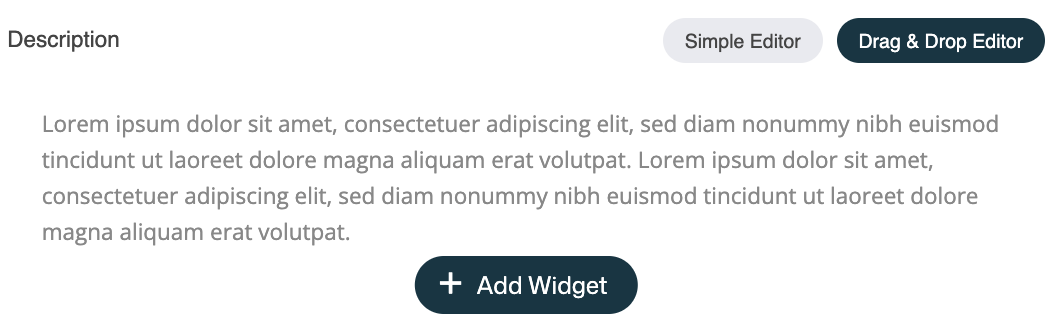
The description will be displayed in the built-in store. You can describe your product using either:
-
Simple Editor – clean text-based description
-
Drag & Drop Editor – opens the web studio controls so you can add any widget – this enables richer layouts with sections, images, and formatting. Simply click the Add Widget button to open the widget panel to the left and drag and drop any widget to the discription field.
Use the description to explain:
- What the product is
- Who it’s for
- What’s included
- Key benefits or features
💡 Tip – Use the AI Writing Assistant for Product Descriptions
You can use the built-in AI Writing Assistant to quickly create or improve your product description.

Generate a description from the product title, expand or shorten existing text, or refine the wording to make it clearer and more compelling.
This is especially helpful if:
- You want a quick starting point
- You need help structuring your copy
- You want to improve clarity or tone
👉 See separate article: Using the AI Writing Assistant
Price

Set the base price of the product.
Available options:
- Standard Price – Sets the regular price for the product.
- On Sale – Display the original price as strikethrough in checkouts, highlighting a discounted sale price.
- Subscription Product – Enables recurring payments by charging customers on a repeating schedule.
Subscription Product
If enabled, the product becomes a recurring or installment-based product.

You can chose:
- Billing cycles
-
Ongoing Payments
Charges continue indefinitely until canceled, e.g. charging every month for monthly plans and every 12 months for annual plans.
-
Installments
Chose a fixed number of payments (2–52 installments)
-
-
Charge every
Chose the payment frequency to every 1–12 weeks or 1–12 months
💡 Tip
Use subscriptions for consumables, refills, or payment plans for higher-priced physical products.
SKU (Stock Keeping Unit)
An optional internal identifier for:
- Inventory management
- Accounting
- Fulfillment systems
💡 Tip
Always use SKUs if you manage inventory or use external fulfillment.
Weight & Dimensions
Required for shipping calculations.
You can define:
- Weight (kg)
- Width, Height, Length
💡 Tip
Enter accurate dimensions to avoid incorrect shipping rates or delivery issues.
Product Type
This is pre-set to the product type chosen when creating the product. The product type determines which fields are shown. Once the product has been created this canät be changed.
Available options:
- Physical product
- Digital product
- Service
- Membership
2. Right Column – Media & Visibility Settings
This column controls how your product looks and behaves externally.
Product Images
Add one or more images to visually represent your product.
Images are used in:
- Store listings
- Product pages
- Checkouts
- Emails and receipts
💡 Tip
Use multiple images showing different angles, details, or usage scenarios. especially important for physical products.
Product Categorization
Assign the product to one or more categories or subcategories. You can also create and assign new categories during the product creation process by clicking the + icon in the Select Product Categories popup:

Categories help:
- Organize your store
- Improve navigation
- Enable filtering
💡 Note
Products are assigned to categories individually (not in bulk).
Hidden Product
When enabled:
- The product is hidden from the store
- Still usable in direct links, funnels, as upsells/downsells or automations using the checkout widget
💡 Use case
Private offers, upsells, or invite-only products.
Product Page URL
Defines the URL slug for the product page.
Example:
/product/product-name
💡 Tip: Keep URLs short, readable, and keyword-friendly.
SEO Settings
Control:
- Page title
- Meta description
💡 Tip – Use the AI Writing Assistant for SEO Title & Description
You can use the built-in AI Writing Assistant to quickly create or refine your SEO Title and SEO Description.
Click Generate via AI to automatically generate an optimized SEO title and SEO description based on your product page (in this case basically the Product name and Product description).
You can also use the AI controls to:
- Improve existing text
- Expand or shorten your SEO copy
- Fine-tune wording for clarity, tone, and search visibility
This is especially helpful if:
- You want SEO-friendly text without starting from scratch
- You need help fitting within recommended character limits
- You want clearer, more compelling search snippets
👉 See separate article: Using the AI Writing Assistant
3. Advanced Product Options (Below Main Area)
These sections add deeper functionality to your product.
Track Inventory
Enable this to:
- Track available quantity
- Show remaining stock
- Get notified when inventory runs low
💡 Tip
Recommended for all physical products with limited stock.
Variations
Variations let you create multiple versions of the same product, such as different sizes, colors, materials, or bundles—without creating separate products.
Common variation examples include:
- Size (e.g. Small, Medium, Large)
- Color
- Material
- Length, format, or edition
- Bundle or package options
You can create custom variation names and values that fit your product exactly.
What You Can Set per Variation
Each variation (or variation combination) can have its own settings, including:

- Price – Set a unique price per variation
- Sale price & On Sale toggle – Control discounts per variation
- SKU – Assign a unique SKU for inventory and fulfillment
- Inventory quantity – Track stock per variation
- Weight – Used for shipping calculations
- Dimensions – Width, height, and length per variation
Variation Images
You can upload separate images for each variation, allowing customers to clearly see what they are selecting (for example, different colors or sizes).

Images can be:
- Added per variation
- Reordered
- Updated at any time
Managing Variations
- Add or remove variation values at any time
- Edit pricing, stock, and details inline
- Automatically generate all variation combinations
- Keep everything organized in a single product
💡 Tip
Use variations instead of creating multiple similar products. This keeps your catalog cleaner, improves the customer experience, and simplifies inventory and pricing management.
Custom Thank You Page
Optionally redirect customers to a custom page after purchase.

Use this for:
- Post-purchase instructions
- Upsells
- Onboarding steps
- Delivery expectations
Additional Questions
Ask customers for extra information before adding to cart.
Examples:
- Engraving text
- Gift message
- Custom notes
💡 Tip
Keep questions minimal to avoid friction during checkout.
Tag Customers
Automatically apply tags to customers after purchase.

Tags can be used in:
- Automations
- Email segmentation
- CRM filtering
💡 Example
Tag customers with physical-product-buyer .
Saving Your Product
When all settings are complete:
- Click Save Changes
- The product becomes available based on its visibility settings
Best Practices for Physical Products
- Use clear product names and images
- Always set accurate weight and dimensions
- Enable inventory tracking for stock control
- Use variations instead of duplicate products
- Test checkout and shipping before going live